Google is releasing a set of tools designed for businesses and employees who want to get work done on Android-powered smartphones, setting up a skirmish on another key front of mobile computing.The technology unveiled Wednesday launches Google's attempt to turn Android phones into the digital hub of people's personal and professional lives. The expansion will pit Google Inc. against Microsoft Corp. and BlackBerry Inc., which have been focusing on the corporate market for years. Google will also be dueling its biggest rival in mobile computing, Apple Inc., which forged a partnership with IBM Corp. last year to build more iPhone and iPad applications tailored for businesses and government agencies.Google and Apple have become so dominant that 96 percent of the smartphones sold last year run on the companies' software, according to the research firm IDC. But most people use those phones to take pictures, message their friends, check Facebook and Twitter and engage in other personal endeavors. In many cases, people also may check their work email on their phones.But Google and Apple are trying to make it more enticing and convenient for people to transplant more of their professional lives on to their phones. As part of that process, the companies are rolling out more business-oriented applications and tougher security to make employers feel more comfortable about their workers using their phones for their jobs."Our vision is that every employee out there should have a work-enabled device in their hands," said Rajen Sheth, director of product management for Android's push into the office.Far more people already own Android phones than iPhones, a lead that Google hopes works to its advantage in the corporate mobility market. IDC estimates that more than 1 billion Android phones were sold last year, compared to 193 million iPhones. The huge disparity has largely been driven by Google's decision to give away its Android software, helping to make the devices running on the software more affordable than iPhones. By design, Apple has focused on more affluent consumers.The corporate and government market is appealing because employers are willing to spend more people on applications and security than most consumers.Google announced its Android for Work program at a conference eight months ago, but needed more time to test the technology before its release.The tools include the ability to create separate personal and professional profiles on the same phone in an effort to reassure workers worried about their bosses snooping on their private lives. Even though the data is kept in separate silos, Google has created a way for work programs and personal apps such as Facebook to appear on the same home screen for convenience.Android for Work will be automatically available on phones running on the most recent release of the operating system, "Lollipop," or version 5.0. An Android for Work app can be downloaded to make the package work on phones running older versions of the software. Google's Play store is also opening a section devoted to work applications.
Thursday, February 26, 2015
We all know Samsung will shortly be announcing the Galaxy S6, but with various rumors flooding in and even Samsung itself accidentally leaking it, it's looking increasingly likely that it will also unveil the Galaxy S Edge, a variant of its flagship with one or possibly even two curved edges.Those might not be the only differences either and we've collected together all the latest rumors to get a straight image of Samsung's bendy handset, which rather than being called the Galaxy S6 Edge is likely to be called the Galaxy S Edge, emphasising that it truly is a different beast.But if you just want the highlights know this: While the Galaxy S6 is likely to be the star of Samsung's show, there's every chance that the Galaxy S Edge will be the more interesting of the two.We don't know for sure when the Samsung Galaxy S Edge will launch, but the smart money is on March 1 at Samsung's press event, where it's also expected to unveil the Galaxy S6. Invitations to the event show a mostly straight line with a bend at the end, suggesting curvy things are coming.It's unlikely to launch the same day as it's unveiled of course, but we may see it on shelves sometime in March.There's still a chance the Galaxy S Edge won't emerge, as late last year SamMobile heard from its insiders there wouldn't be one, but that's a relatively old rumor and the number of recent rumors around it (not to mention the curved line on Samsung's invite) suggests there will be.Hopefully you've been saving if you want one, as AndroidPIT reports that it's received the expected price in Euros and it starts at €849 (roughly £636 / $970 / AU$1241) for a 32GB model, rising to €949 (around £711 / $1085 / AU$1387) for 64GB and €1,049 (approximately £786 / $1199 / AU$1534) for 128GB.Not only would those prices make it one of the most expensive phones on the market, but it's likely to be more expensive than the Galaxy S6, which had its expected prices outed by the same source and came in at €100 (£75 / $114 / AU$146) cheaper for each size.Of course direct currency conversions aren't always accurate, but based on these prices we expect the Galaxy S Edge will enter the market at between around $749-$849 unlocked. It's also possible that it will be a limited edition device, so availability could be tricky.The screen will of course be the Galaxy S Edge's standout feature and it's also one of the biggest question marks, as while early rumors suggested it would have one curved side like the Galaxy Note Edge, a number of recent rumors point to two curved edges.The reason for rumors of both could be because apparently Samsung was still testing multiple prototypes of the phone until recently and hadn't decided whether to go with one or two curved edges.We're inclined to believe the recent rumors of a dual edged display because, well, they're more recent. They include a patent showing a handset with two curved sides and a report from SamMobile which claims its source revealed that the S Edge will have two curved edges.Better yet, we've even caught a glimpse of a promotional image from a case maker, seemingly showing a dual-edged Galaxy S Edge alongside the Galaxy S6.Some rumors state that these curved screens will have access to the same features as the Galaxy Note Edge, allowing you to view apps, such as a pedometer and news and sports updates at a glance.The dual curves also supposedly make it comfortable to use whether you're left or right handed and the curves will supposedly light up when you receive a call or a message.These lights may be customisable to show different colours for different contacts, and as well as viewing alerts you're also likely be able to add app shortcuts to the edges and use them as tools such as a ruler or a night clock.On the other hand recent rumors argue that the edges will be smaller than on the Galaxy Note Edge and will therefore have reduced functionality. That's one rumor that we hope doesn't pan out.Little has been spoken about the size or resolution of the Galaxy S Edge, but we've heard a lot about those things on the Galaxy S6 and they're likely to be the same or similar here.The most persistent Galaxy S6 rumors are that it will have a 1440 x 2560 QHD display. Surprisingly there's still no consensus on the size, but it's likely to be at least as big as the 5.1-inch Galaxy S5 and indeed 5.1 inches is exactly what some of the latest rumors point to, though there's some talk that it could go as big as 5.5 inches.The only rumors we've heard specifically talking about the Galaxy S Edge's display size come from a benchmark and again point to a 5.1-inch 1440 x 2560 one.Whatever size it is you can bet it will be a Super AMOLED screen, like every other Samsung flagship in recent memory.In more disappointing news a report out of South Korea claims that the Galaxy S Edge won't be waterproof, with Samsung producing a waterproof Galaxy S6 Active instead for those who want that feature.Curved screen aside the design of the Galaxy S Edge is likely to be similar to that of the Galaxy S6. That could mean a metal frame and glass back or even a full metal body, as there's still some debate as to which of those the S6 will feature.But there's the niggling worry that the Samsung Galaxy S Edge might actually have a less premium build. For one thing the fact that the Galaxy Note Edge lacked the metal frame of the Galaxy Note 4 doesn't bode well.On top of that Business Insider reports that Samsung will announce two phones in March, saying that one (the Galaxy S6) will have a metal body, while the other (the Galaxy S Edge) will have a curved screen. The implication being that the S Edge won't also have a metal body.So while the Samsung Galaxy S6 is likely to be more expensive than its big-name brother it might not actually end up looking quite as high end.We may have caught a glimpse of the S Edge though, as a new leak appears to show it snapped alongside the Galaxy S6. You can see from the photos that its screen curves at both edges and the rear appears to be made from the same (apparently glass) material as the Galaxy S6.Following in the footsteps of the Galaxy Note 4 and Galaxy Note Edge we're expecting the Galaxy S Edge to have the same amount of power as the Galaxy S6. More specifically it looks like it will come with Samsung's octa-core Exynos 7420 chipset if SamMobile is to be believed, though the octa-core Snapdragon 810 is also a possibility.RAM has been rumoured at both 3GB and 4GB and either way it should be a real powerhouse when coupled with a high end 64-bit octa-core processor (which both the Snapdragon 810 and Exynos 7420 are).As for storage, it's expected to ship with a choice of 32, 64 or 128GB and there's also talk from G4Games that it could use Universal Flash Storage, which provides enhanced data speeds and power consumption savings of up to half compared to the previous generation of flash memory.A device believed to be the Galaxy S Edge recently passed through AnTuTuachieving a score of 60,978 in the process, which suggests it's one of the most powerful phones around. The benchmark revealed a 5.1-inch 1440 x 2560 display, an octa-core Exynos 7420 processor clocked at up to 2.1GHz, 3GB of RAM, a 20MP rear camera, a 5MP front-facing one and 32GB of storage.It's also likely to be a speedy performer on 4G, as Category 6 LTE support is rumored for the Galaxy S6, allowing for download speeds of up to 300Mbps.A specs listing sent to BGR from a "trusted source" pegs the Galaxy S6's battery at 2550mAh and with no conflicting Galaxy S Edge rumors we have to assume Samsung's curvy contender will have the same size juice pack. The good news is it should also support fast charging, giving it up to four hours of usage on a 10 minute charge.It's a safe bet that the Samsung Galaxy S Edge will run Android and it will almost certainly be on Android 5.0 Lollipop, since that's the latest version.That's good news, though the fact that it will probably be overlaid with Samsung's TouchWiz UI may not be met with much enthusiasm. There's good news there too though, as it's rumored that Samsung is simplifying TouchWiz to make it a lot closer to stock Android. Though there will apparently be a theme store, to let you add visual customisations out of the box.So far we've mostly only got Galaxy S6 rumors to go on for the camera, but as with many other aspects of the phone the two are likely to have similar or identical snappers.An early rumor from ETNews states that the Galaxy S6 (and by extension probably the Galaxy S Edge) will have a 20MP camera, while SamMobile reckons that it will have either a 16MP snapper with optical image stabilisation or a 20MP one without.The front facing camera is likely to be at least 5MP, given that Samsung's more mid-range A series packs 5MP shooters.Sources speaking to SamMobile claim that the Galaxy S Edge will be compatible with Gear VR, so that's one feature you can hopefully look forward to.Sources speaking to SamMobile claim that the Galaxy S Edge will be compatible with Gear VR, so that's one feature you can hopefully look forward to.It will also almost certainly have a fingerprint scanner and rumors point to an improved touch-based one, similar to Apple's Touch ID.A heart rate monitor is very likely, as is a microSD card slot, while fast-charging functionality and a UV sensor have also been touted for the Galaxy S6, and as such are likely to make their way to the Galaxy S Edge too.Another Galaxy S6 rumor suggests we might see magnetic resonance charging make its commerical debut and if it makes it to the Galaxy S6 there's a good chance it will find its way into the Galaxy S Edge as well.
Samsung hasn't officially announced that the Galaxy S6 will come with a wireless charger - heck, it hasn't technically confirmed the Galaxy S6 at all - but as usual that hasn't stopped the FCC from letting the cat out of the bag.
The US Federal Communications Commission has published its approval of the Samsung wireless charger, which could also support Samsung's rumored upcoming "Orbis" smartwatch.
In the FCC's documents the Samsung wireless charger appears round, a decent hint that it might support both devices.
We're expecting to see the Galaxy S6 and the Galaxy S6 Edge - which both appeared in a recent photo leak - on March 1, so hopefully we'll learn more about Samsung's wireless charging plans then.
Over a billion people today carry Android smartphones—devices that are more powerful than the computers we used just a few years ago.
For many, these phones have become essential tools to help us complete important work tasks like checking email, editing documents, reviewing sales pipelines and approving deals. But for the majority of workers, smartphones and tablets are underutilized in the workplace. Their business and innovation potential remain largely untapped.
Today we're announcing the Android for Work program to tap into that potential. With a group of partners, we're helping businesses bring more devices to work by securing, managing and innovating on the Android platform.
Android for Work features four key technology components:
For many, these phones have become essential tools to help us complete important work tasks like checking email, editing documents, reviewing sales pipelines and approving deals. But for the majority of workers, smartphones and tablets are underutilized in the workplace. Their business and innovation potential remain largely untapped.
Today we're announcing the Android for Work program to tap into that potential. With a group of partners, we're helping businesses bring more devices to work by securing, managing and innovating on the Android platform.
Android for Work features four key technology components:
- Work profiles – We’ve built on the default encryption, enhanced SELinux security enforcement and multi-user support in Android 5.0, Lollipop to create a dedicated work profile that isolates and protects work data. IT can deploy approved work apps right alongside their users' personal apps knowing their sensitive data remains secured. People can use their personal apps knowing their employer only manages work data and won’t erase or view their personal content.
- Android for Work app – For devices running Ice Cream Sandwich through Kitkat, or that don’t run work profiles natively, we’ve created the Android for Work app. The app, which delivers secure mail, calendar, contacts, documents, browsing and access to approved work apps, can be completely managed by IT.
- Google Play for Work – Google Play for Work allows businesses to securely deploy and manage apps across all users running Android for Work, simplifying the process of distributing apps to employees and ensuring that IT approves every deployed app.
- Built-in productivity tools – For everyday business tasks, we’ve created a suite of business apps for email, contacts and calendar, which supports both Exchange and Notes and provides document editing capabilities for documents, spreadsheets and presentations.
Google’s Android has gobbled up market share world wide, now accounting for over 80% of all smartphone shipped globally. But when it comes to actually making money, Apple is eating all the profits as it continues its focus on premium devices. Today Strategy Analytics said that Apple in Q4 last year accounted for 89% of all smartphone profits, equating to $18.8 billion, with Android taking only 11%, or $2.4 billion.
The blow for Android is softened only slightly less so only by the fact that other platform players like Microsoft, Blackberry and Firefox seemingly made no profit at all.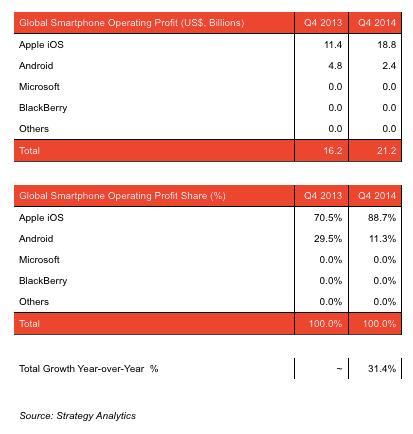 The figures given here relate to profits generated by handset makers, not the services ecosystem and potential profits made by app publishers and others, which, of course, includes Google itself, which adds new users of for its mobile search business, mobile ads business and other apps with each unforked Android sale.
Overall, smartphone handset profits were up 31.4% compared to the same quarter a year ago.
When it comes to who is performing best among Android OEMs, the results speak of the growing competition for Samsung.
Neil Mawson, research director for Strategy Analytics, says the “three big profit drivers” for Android are Samsung, Huawei and Xiaomi.
“Samsung is the Android giant that delivers most of Android’s smartphone profits worldwide,” he tells me. Mawston says the company is not breaking out exact shares, except to say that “Samsung accounted for well over half of all Android smartphone profits globally in Q4 2014.”
As a point of comparison, in 2013, Samsung accounted for 95% of Android profits. That was a time where there was significantly more parity between Apple and the Korean handset maker both in terms of unit sales and revenues, with Apple accounting for “only” 57% of profit at the time.
It’s not too surprising that Apple — which last quarter had the most profitable company of any quarter, ever — is dominating in smartphone profits, but what is striking is just how wide the gulf has become.
The bigger picture seems to be that Android handset makers are in something of a race to the bottom at this point: the markets that are driving growth in smartphone adoption these days are emerging economies, where consumers are price sensitive. That’s leading to the production of a number of models that are pushing down the average sale price for devices, which long ago dropped below the $100 mark.
Apple may have missed the boat (so far) when it comes critical mass in market share in these developing markets, but it has more than made up for it by making a killing in places where it is strong. China is one such crossover example. While there is clearly a market for lower-cost and Android devices, Apple has been posting record sales in the country, reporting sales of $16 billion in the country in Q4. (China is not — yet — however overtaking Apple’s sales in markets like the U.S.)
In the world of smartphones, Android’s gains do not equal Apple’s loss. But Android’s gains might translate into Android losses down the line, Strategy Analytics notes.
“Apple’s strategy of premium products and lean logistics is proving hugely profitable,” Mawston writes in the report. “Android’s weak profitability for its hardware partners will worry Google. If major smartphone manufacturers, like Samsung or Huawei, cannot make decent profits from the Android ecosystem, they may be tempted in the future to look at alternative platforms such as Microsoft, Tizen or Firefox.”
Sunday, December 21, 2014
Christmas is less than a week away, which means, friends, that this is the final Week in Gaming you'll read/endure in 2014 - please weep/rejoice as appropriate.
There was probably a moment many years ago, around the time you first saw Back to the Future Part II, that you imagined what 2015 might look like. It was the year Marty McFly famously stepped on the hoverboard, and maybe you hoped we'd all be playing games with our minds and eating pills instead of meals.
Now take a look out the window. Disappointing, isn't it? Ours cars can't even fly.
Alas, you'll have to keep fantasising for now, but to help keep the faith alive I'll kick off this week's gaming frenzy with some rather rad news: Xbox virtual reality is happening.
TechRadar has been informed by multiple sources that dev kits for Microsoft's VR headset are already in the hands of some developers. That alone is exciting enough, but the HMD is also looking hopeful for a E3 2015arrival.
We're unable to confirm exactly what the headset will look like, but there have been suggestions that it may blend virtual reality and augmented reality to give it a unique edge over Sony's Project Morpheus.
Actually, we say that's the most exciting news of the week but we did also get Hearthstone on our Android tablets. It's no coincidence that productivity levels have been dropping ever since - good thing we can blame Christmas spirit or some other nonsense.
Snow problem
You know that feeling when you see someone wearing an ugly Christmas jumper unironically, and all you can think is 'I want to run you down with my Landstalker'? Well get grandma round because GTA 5 is making that dream come true this Christmas thanks to some festive DLC.
Rockstar has dropped a huge crate of goodies for GTA 5 players, including a new homing missile and proximity mines "to make spirits bright", some pyjamas and "ugly" jumpers, new masks, and the promise of some holiday crate drops that'll be stuffed with Christmas cheer. Cheer meaning "probably explosives".
But our favourite stocking filler from Rockstar is the promise of occasional snowfall in Los Santos, during which you'll be able to partake in snowball fights with your friends. "But be forewarned," says Rockstar, "those icy little suckers can pack a wallop." See kids, who needs real Christmas when you can live in your Xbox and pummel each other to death with snowballs there instead? Marvel at how lifelike the blood looks at it seeps into the snow.
Our strangest story of the week goes to Captain Toad: Treasure Tracker, Nintendo's shot at giving the animated mushroom its own spinoff. After a year of countless release delays from a multitude of publishers, Nintendo did the unthinkable: it actually brought the launch forward by two weeks.
Oddly enough, that night I dreamt I was navigating my way through one of the levels as Toad and his mushroom friends chased me, pick axes in their hands and a homicidal look in their eyes. This game is already giving me nightmares. I must buy it.
So long, old friend
But unfortunately all of this has been overshadowed by some extremely sad news. This week it was announced that our fellow CVG will be closing its doors. Some of the content will be migrated over to GamesRadar but currently none of the existing staff will stay, which means it truly is the end of an era.
As the world's oldest video game brand, CVG has witnessed (and in many ways helped) a niche industry unfurl into something massive and mainstream, perhaps against the odds. So we doff our hats to this brilliant publication, and all the laughs and brilliant content you've given us over the years. If you've even so much as glanced at CVG during its time, these messages from the editors reflecting on 33 years of brilliance are well worth a read.
Those Google+ users who often use the service for posting videos now have some exciting new tools. The automated enhancements for photos has been available for more than a year, and now the feature is coming to videos as well. Videos uploaded to the service that are flagged by Google's automated system can be enhanced with improved stability, color correction, and lighting enhancements. Improvements to sound for better voice quality are planned for a future update.On the web, any video that's uploaded to Google+ will be analyzed by the back-end system, and users will be auto-alerted when any enhancements can be applied. To manually apply the enhancements, open the "More" menu and select "auto-enhance." On Android, the option is only available in the semi-separate Google+ Photos app (the one with the pinwheel icon). Open a single video, press the menu button, and then press "auto-enhance." This might not be active for all users - I'm not seeing the option on my Nexus 6.One of the cooler functions on the new video enhancement tool is the side-by-side comparison. When you choose the auto-enhance option, the unedited video and the enhanced video will show in a side-by-side preview. Since there aren't any user-accessible options for the changes, it's a handy way to immediately decide whether or not you want to edit the video or leave it in its original form. Be sure to check out the framing and resolution - the stability enhancements in particular can result in lower clarity
Google's new Android software comes with an important feature for photography enthusiasts: the ability to shoot raw images.
This means users will be able to see what photos look like before the phone's camera processes it and translates it to a JPEG file.
The ability to shoot in raw is common on high-end DSLR cameras, but hasn't made its way to mobile until now.
So why does this matter? The average person probably doesn't care much about shooting photos in raw.
In fact, it would probably be more of an inconvenience than an improvement. The camera software in phones are built to compress and translate images into a JPEG or similar file format since it's easy to share and edit.
But those who do know a thing or two about photography could benefit greatly from the new feature. Unlike JPEG or PNG, raw gives you the freedom and flexibility to edit and manipulate particular parts of an image.
Raw photos are essentially pure image data captured through a camera without any compression or modifications — meaning photographers can fiddle with it any way they want using software like Photoshop, as Shankland explains. In other words, when you're shooting in raw the camera's software doesn't make any assumptions about how colors and other elements of an image should look.
It might not be the most noticeable addition to Android, but it opens up the door for mobile phones to replace professional cameras in certain circumstances. And, it certainly gives Android a leg up over the iPhone in that particular regard. Although the iPhone takes fantastic images, it doesn't allow you to shoot in raw like you can with phones running Android 5.0.
Sources at Reuters claim that the next major version of Android, which it calls "Android M," will support being used as an in-car infotainment OS. The outlet says the OS would be built right into the car's hardware and would have the full suite of standard infotainment features.
Google's infotainment OS will probably look similar to Android Auto, thanks both to Google's Material Design guidelines and the need to have the interface approved by various safety groups around the world. The interface would have to be a lot more comprehensive than Android Auto, though, which only supports calls, navigation, music, voice queries, and texting by voice.
Just like Harman's CEO, the Reuters report said that Android's startup time will need to be greatly improved in order for it to be a viable car infotainment OS. The report also gave a time frame for release: Android M, along with infotainment support, is expected out "in a year or so."
Unified Remote is a remarkably powerful app for remotely controlling the functions of your PC. (Not your TV, unless you have an IR port.) The last beta release of the app, which used the frustrating Google Groups testing system, implemented remote control support via an Android Wear app. Now you can get that Wear support in the standard Play Store version, no beta opt-in necessary. You'll need the full version, a $4 add-on, to access the Wear app.Using the customization tool in the phone version of Unified Remote, simple commands from the various hardware and web service functions of the Unified Remote server can be accessed on your wrist. It's particularly useful when combined with a tool like the Wear Mini Launcher. The Unified Remote notification is also semi-permanent, allowing users to access the buttons with a simple swipe.
Other changes in this version of Unified Remote include the usual UI and performance improvements. The Wear app should appear on your digital watch as soon as you install both the standard and premium app. To configure Unified Remote with your computer, you'll need the free PC server application. Dozens of plugins for popular programs like VLC and Netflix are available.
It’s been less than two months since Android 5.0 made its public debut, and already Google is rolling out its second patch. An Android 5.0.2 factory image has just been made available for the 2012 Nexus 7, fixing a number of issues that have been plaguing users since Lollipop first arrived.
The new release comes with the “LRX22G” build number, and it replaces the Android 5.0.1 patch for the 2012 Nexus 7 (Wi-Fi). It includes both the changes made in that release, as well as some other welcome bug fixes.
“Most of these are adjustments in the kernel and startup scripts to boost CPU activity and maintain a bit higher performance,” Android Police reports. “There has also been another fairly significant update to fstrim, the process responsible for pruning the filesystem of unused blocks to prevent lag when attempting to write to a location in NAND storage containing outdated data.”
Google has also addressed an issue with AlarmManager, a process responsible for waking the device when apps and services need to perform different activities.
If you’ve been experiencing strange issues with your 2012 Nexus 7 since upgrading to Lollipop, then you’ll want to get your hands on this release as soon as possible. It’s only available as a factory image for now, so you’ll need to flash it manually, but we expect the over-the-air release to come soon.
We also expect Android 5.0.2 to be made available to other Nexus devices in the coming days and weeks.
When it rains, it pours, and such is the collection of confectionery confetti that is flowing down from the Mountain View candy land. Released in October, Android 5.0 landed with the Nexus 9, yet just a few weeks later 5.0.1 was already on its way, a small update to address bugs, but which also included fast and slow-motion video recording.
LRX22G has just been released by Google, which brings the hard candy’s teeth-talking tally to 5.0.2. The update is currently only available for the Nexus 7 (2012) Wi-Fi version. Google has since pulled the device’s 5.0.1 patch.
According to XDA Developers, the 5.0.2 update addresses “issues with MountService which should now start before performBootDexOpt [and] changes related to NAND have also been pushed. Fstrim, introduced in Android 4.3, caused some serious issues on Lollipop… devices with slow NAND should now have a noticeable performance boost.”
Lollipop is definitely shaping up to be the most unusual of all Android releases so far. Google released an unprecedented Developer Preview (Android L) earlier this year, and has now pushed out two patches within a very short span of time. Additionally many users have reported major problems with their older hardware upon updating, especially when it comes to poor power management.
The existence of yet another update will also mean that OEMs desperately scrambling to get their Lollipop builds in order have yet another new version to test when conceivably the original 5.0 still hasn’t been given the green light to push OTA.
If any of our readers feel compelled to manually update, please feel free to share your comments below and let us know if there is any noticeable improvement in the software experience.
The factory image can be found here, and is officially signed by Google. Please note that the Android SDK is required to install it, as is a more advanced understanding of sideloading.
Thursday, February 27, 2014
Heads up, Android users, because your little green robot is about to get quite a bit more secure.
A new report from Computerworld has revealed that Google is planning to roll out an update to Google Play Services in the coming weeks that will beef up Android's Verify Apps feature. Verify Apps originally debuted with Android 4.2 in 2012 as a feature that checks new apps as they're installed to ensure that they don't contain any malicious code or other nastiness. Last year, Google rolled its Verify Apps feature out to all Android devices running version 2.3 and up.
Now Google has whipped up an expanded version of Verify Apps that will continue to check on apps even after they've been installed to a user's device. Android Lead Security Engineer Adrian Ludwig explains that this will be helpful as Google continues to gain more knowledge about the threats that are out there. He also says that the updated version of Verify Apps will come in handy for tracking apps that were installed before Verify Apps came to be as well as those apps that are put onto a device without the user's knowledge.
Google has long been working to protect Android users from malicious apps, introducing features like Bouncer, which debuted in 2012 to help keep the Play Store free of software that do harm to a user's device. This updated version of Verify Apps is another step in Google's security efforts, and it's good to see the company actively working to protect its users.
As I mentioned before, the updated version of Google Play Services is expected to start rolling out in the coming weeks. It'll silently hit all devices running Android 2.3 and higher, so if you count yourself as part of that group, just sit back and revel in the fact that you and your Android will soon enjoy increased protection from the baddies of the app world.
Via ComputerWorld
Apple broke new ground last year by launching a 64-bit mobile processor, the first of its kind in the mobile industry. Since then, a number of other chip makers have put their 64-bit ambitions into overdrive to keep pace including Samsung.
The Korean tech giant expects to join the 64-bit race later this year. During a recent chat with CNET at Mobile World Congress, Kyushik Hong, vice president of marketing for Samsung's system LSI business, said 64-bit was very important in the sense that there is a real demand regardless of whether or not it is needed.As such, Samsung is actively working on it and their chip will be ready whenever the operating systems and ecosystem (Android) moves to 64-bit. Apple enjoys an advantage in this area as they control both the operating system and the design of their processors. Crafting the hardware and software under the same roof means they don’t have to wait on one side to “catch up” to the other.
Apple and Samsung aren’t the only ones invested in 64-bit. Late last year, Qualcomm moved to 64-bit with the announcement of the mid-range Snapdragon 401 SoC and earlier this week, the company revealed two more 64-bit chips: the Snapdragon 610 and 615. Intel also showed its hand at Mobile World Congress earlier this week with the Merrifield and Moorefield mobile chip lineup while Nvidia did the same at last month's CES with its Tegra K1 SoC.

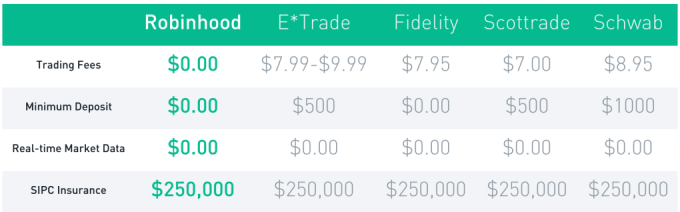
RobinHood is about to let anyone buy and sell stocks for free instead of having to pay E*Trade or Scottrade $7 per transaction. Today RobinHood begins inviting the 160,000 people who’ve signed up to download its glossy new app where you can efficiently track and trade stocks. “It’s by far the most beautiful brokerage app, though that’s not saying much” co-founder Vlad Tenev jokes.
But while RobinHood makes Wall Street look stylish in your pocket, what’s special is what it does, and does for free. That’s letting you trade stocks with zero commission. You might assume it would cost RobinHood money to execute trades, but in fact it can make money by moving yours around. We’ve just been conditioned to assume its something you have to pay for after decades of investors handing Scottrade, E*Trade and other brokerages $7 to $10 for each buy or sell.
Those who want their trading for free can sign up for RobinHood and expect an invitation email over the next few weeks to months. Since you’re trusting it with your savings, RobinHood wants to onboard people with extreme care rather than as fast as possible. But soon it expects to be holding hundreds of millions of dollars for its users so they can make instant trades from their phones.
RobinHood gave TechCrunch the first look at its new app, and its investor Google Ventures‘ attention to design is readily apparent. The whole app is themed white or black depending on if the stock market is open or closed. Meanwhile, the app’s chrome goes green or red depending on if the currently viewed stock is up or down that day. This trick tells you at a glance whether you can officially trade or not and how well you’re are doing.

Most finance apps only let you monitor stocks like Yahoo Finance or the first version of RobinHood, or charge you to trade them like those from the big retail brokerages. RobinHood co-founder Baiju Bhatt stresses that if you want to do deep financial research, you probably want to sit down at a desktop. But if you want to check your stocks whenever you have free moment and make some trades when the courage strikes you or whenever something shocks the market, RobinHood lets you do it in a few swipes. [Disclosure: I was friends with Vlad and Baiju in college.]
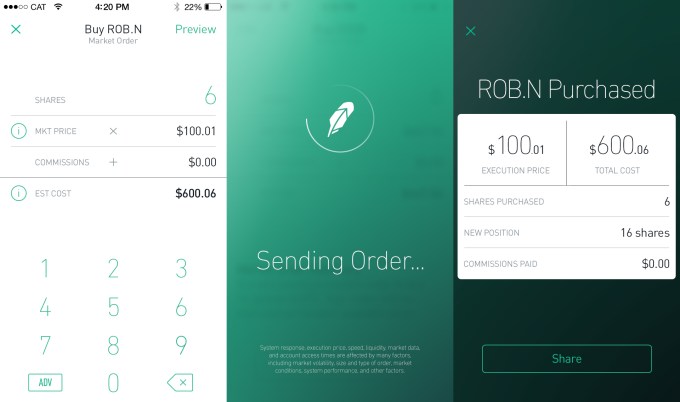
You can set alerts in case your stocks move a certain percentage, or place limit orders that are executed if the price hits a certain point. When you’re ready to make a live trade, just select how many shares of a stock you want to buy or sell. RobinHood previews how much that will cost or earn you, and you swipe to confirm the trade (which triggers some delightful animations and buzzes). And because security may be the biggest threat to RobinHood, it even lets you set up a special pin code that’s required to open the app.
RobinHood says it will never charge for trading. Right now, it’s supported by over $3 million in funding from Google Ventures, Index Ventures, Andreessen Horowitz, Rothenberg Ventures and some angels. But it plans to quickly become self-sustained by charging other developers for API access, letting users trade on margin (money they’re owed but don’t own yet) for a fee, and through payment for order flow where stock exchanges pay the startup to bring its trading volume to their marketplaces.
For now, though, RobinHood could democratize stock trading. If you were a fat cat trading in the hundreds of thousands or millions, those little $10 fees didn’t mean much. But if you’re not rich and still want to invest, those commissions could add up to eat away at what you earn through smart trading. By replacing brick-and-mortar store fronts and legions of salespeople with an app and a lean engineering team, RobinHood can pass the savings on to its users.
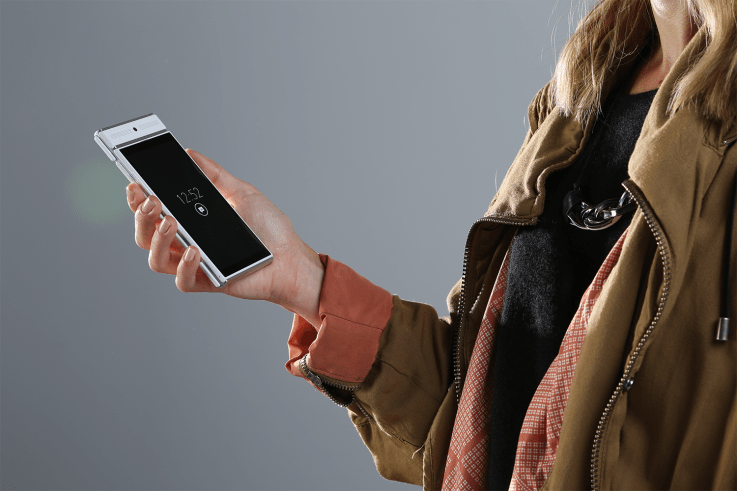
Google’s Advanced Technology and Projects Division just announced its first developer event for Project Ara, a modular smarpthone, yesterday, and a new follow-up profile by TIMEindicates we could see the device come to market by next year, with a $50 price tag to start. The key phrase there is “to start,” however, as this smartphone with swappable components could get a lot pricier, very quickly.
Ara is designed to offer consumers choice, with an open platform design that provides a basic chassis from Google with, the option to customize functionality using modular components sourced from third-party hardware developers. Users could buy sensors, additional storage, more battery capacity, better speakers and so on, slotting in and out components as needed. Including stupid ones, by the way: project lead and DARPA vet Paul Eremenko tells TIME an “incense burner” could be a module
Google wants to get the price point on the base Ara hardware to $50, but you wont’ get much in exchange for that – the only connectivity on board will be Wi-Fi at that price point. But the point is that users could build it up however they liked, rather than being stuck with whatever they got when they signed up. But that entails additional expense: Depending on what you want your phone to be able to do, it’s easy to see the price rising quickly.
This leads to a couple of different analogies about how this might work out in practice – it’s a little like a razor and blades setup, offering the potential for a continuing revenue stream from upgrade components. But it’s more akin to a freemium software model, since the modules aren’t expendable like razor blades, but rather optional add-ons that enhance the experience, but aren’t strictly necessary to it.
Ara’s aim isn’t to upsell, however, or at least that doesn’t seem to be the intent of the Ara founding team. Instead, it wants to bring full-featured devices to the world’s next 5 billion potential smartphone users, without forcing them to swallow a huge price tag as well. Of course, this will definitely appeal to hobbyists as well, including the same kind of people who liked the Handspring Visor and its Springboard, but with modern smartphone styling that ATAP says will keep overall device depth down to less than 10mm, with 4mm deep modules.
The TIME profile also sheds light on some of the fundamental mechanics of how Ara works. Modules are designed to slot in to each compartment on the basic chassis interchangeably, regardless of what each does. They’re also hot-swappable, so you don’t need to power down the phone to replace individual parts. Finally, the modules are secured to the device using hardware latches, which use magnets to lock stuff in place. That lock is released using an app of the phone, so that they won’t fall out when jostled or when the phone drops.
Ara is definitely an amazing innovation, and a project that it would be amazing to see come to fruition. It’s also massively ambitious, and not every experimental tech Google develops ends up as a proper shipping project. Modularity has a lot to potentially offer the smartphone market (and could also be very interesting when applied to tablets) but there’s a lot of ground to cover between here and selling these things in stores. Still, if anyone has the resources and runway to make it happen, Google is a pretty good candidate.
Microsoft partner and soon to be subsidiary Nokia introduced Android-powered devices at MWC this year in an apparent bid to go after the low end of the market, but there’s more and more reason to believe that experiment won’t continue once MS takes the reins of Nokia’s hardware division. A fresh report today suggests that Microsoft is mulling a licensing fee price cut of up to 70 percent compared to what it currently charges.
That price drop is coming, according to OEM smartphone maker Infosonics — which deals in low-cost Android devices — speaking to PCMag. Its intended purpose is to make it possible for OEMs like Infosonics to build affordable Microsoft hardware that can compete with its budget Android devices.
Previously we’d heard that Microsoft was looking at getting rid of the licensing fee altogether, but the software giant still makes a good portion of its revenue from licensing its desktop OS, and is likely unwilling to cede that stream entirely. Licensing fees for Windows Phone were between $20 and $30 as of the last word from a hardware partner, so a 70 percent cut would put new fees at roughly between $6 and $10 per unit.
Microsoft has already lined up some low-cost manufacturing partners, including manufacturers in China and India, so it’s making headway in getting its software in the hands of entry-level consumers, and working around what some see as prohibitive hardware minimum spec restrictions for Windows Phone. And despite the presence of any real budget devices, Windows Phone remains a good candidate for the fastest-growing mobile operating system over the next few years, according to predictions by research firm IDC.
The Nokia X project could continue to survive as a way to get users committed to Microsoft services, but judging by Microsoft’s messaging on that subject, as well as the news above, I’d say it’s much more likely that we’ll see the company go it alone and try everything possible to get low-cost hardware running Windows Phone into the hands of the next billion smartphone users.
Apple has shared some information around how Touch ID and its Secure Enclave keeps information private in an updated security document newly posted to its “iPhone in Business” microsite. The new info provides an inside look at how exactly the Secure Enclave generates and communicates encrypted and temporary identification information to the rest of the system to make sure that fingerprint data is never exposed to anything beyond itself.
Each Secure Enclave is provisioned during fabrication with its own UID (Unique ID) that is not accessible to other parts of the system and is not known to Apple. When the device starts up, an ephemeral key is created, tangled with its UID, and used to encrypt the Secure Enclave’s portion of the device’s memory space.Additionally, data that is saved to the file system by the Secure Enclave is encrypted with a key tangled with the UID and an anti-replay counter.
The Secure Enclave portion of the A7 chip is of course responsible for handling fingerprint data collected by the Touch ID sensor. Apple goes on to detail how the A7 processor helps gather the fingerprint data, but can’t actually read said information itself, and how the exchange that takes place between the A7 and the secure enclave is encrypted to prevent any hijacking of the data at that point.
Communication between the A7 and the Touch ID sensor takes place over a serial peripheral interface bus. The A7 forwards the data to the Secure Enclave but cannot read it. It’s encrypted and authenticated with a session key that is negotiated using the device’s shared key that is built into the Touch ID sensor and the Secure Enclave. The session key exchange uses AES key wrap- ping with both sides providing a random key that establishes the session key and uses AES-CCM transport encryption.
As for Touch ID itself, Apple details how the fingerprint-based unlocking and iTunes purchasing authorization tech works in a completely new section of the iOS Security document. It mostly explains what users likely already know about Touch ID: When it does and doesn’t work (i.e. after a restart), but also adds a few things that might not be clear from normal use – Touch ID unlocking stops working after an iPhone 5s has been left locked for 48 hours or more, for instance, requiring a text or number-based password input.
Apple also reiterates its firm “no third-parties” rule with Touch ID and fingerprint information, which is worth recalling given Samsung’s different take on the matter, with its Pass API announced earlier for platform developers.
Touch ID authentication and the data associated with the enrolled fingerprints are not
available to other apps or third parties
The document also includes previously revealed technical data around the Touch ID scanner itself, which takes an 88-by-88-pixel, 500-ppi raster scan of the finger being applied, which is then transmitted to the Secure Enclave, vectorized for the purposes of being analyzed and compared to fingerprints stored in memory, and then discarded. This info, it’s worth recalling, is never transmitted to Apple’s servers, nor is it stored in iCloud or the iTunes backup of a device.
Apple closes the section on Touch ID with a detailed, step-by-step explanation of how unlocking the smartphone with the tech works, which is worth a look if you’re unclear on the behind-the-scenes magic or security protections involved:
On devices with an A7 processor, the Secure Enclave holds the cryptographic class keys for Data Protection. When a device locks, the keys for Data Protection class Complete are discarded, and files and keychain items in that class are inaccessible until the user unlocks the device by entering their passcode.On iPhone 5s with Touch ID turned on, the keys are not discarded when the device locks; instead, they’re wrapped with a key that is given to the Touch ID subsystem. When a user attempts to unlock the device, if Touch ID recognizes the user’s finger- print, it provides the key for unwrapping the Data Protection keys and the device is unlocked. This process provides additional protection by requiring the Data Protection and Touch ID subsystems to cooperate in order to unlock the device.The decrypted class keys are only held in memory, so they’re lost if the device is rebooted. Additionally, as previously described, the Secure Enclave will discard the keys after 48 hours or 5 failed Touch ID recognition attempts.
Another new section details iCloud Keychain, the syncing service that stores your passwords for use across platforms. Apple notes the system is designed to prevent unauthorized access to iCloud Keychain stored information in the event of a compromised iCloud account, and to prevent third-party access to any passwords housed in the service.
Below is an excerpt of how iCloud makes sure that keychains are recovered only by authorized users, without even actually transmitting the local iOS security code to Apple itself.
iCloud provides a secure infrastructure for keychain escrow that ensures only authorized users and devices can perform a recovery. Topographically positioned behind iCloud are clusters of hardware security modules (HSM). These clusters guard the escrow records. Each has a key that is used to encrypt the escrow records under their watch, as described previously.To recover a keychain, the user must authenticate with their iCloud account and password and respond to an SMS sent to their registered phone number. Once this is done, the user must enter their iCloud Security Code. The HSM cluster verifies that the user knows their iCloud Security Code using Secure Remote Password protocol (SRP); the
White Paper 26 iOS Security code itself is not sent to Apple. Each member of the cluster independently verifies that the user has not exceeded the maximum number of attempts that are allowed to retrieve their record, as discussed below. If a majority agree, the cluster unwraps the escrow record and sends it to the user’s device.
Apple has also added new information about iMessage, FaceTime encryption, single sign-on and Airdrop in terms of areas of interest to check out. If you’re a fan of learning how things work, or just want to know what steps Apple takes to protect any biometric information (and other data) it collects and transmits during normal iOS operation, the entire security document is definitely worth perusing.
T-Mobile CMO Mike Sievert is pumped about Samsung’s new Galaxy S5 smartphone: Today, the executive tweeted that Samsung’s latest flagship is a record-breaker at the carrier, with over 100,000 pre-registrations in under 48 hours since its announcement.
100,000+ pre-registrations in 2 days is a new record at @TMobile #GalaxyS5 !!—
Mike Sievert (@SievertMike) February 26, 2014
Pre-registrations are notably not pre-sales – they represent just consumer interest in an upcoming device, not a commitment to buy. Still, Sievert says that this indicates the launch of Samsung’s upcoming phone will “be big,” according to another tweet.
Google is not abandoning Project Ara, after taking over the ambitious experimental smartphone design concept along with the Advanced Technology and Projects (ATAP) group from Motorola. ATAP only just announced Tango, its 3D-environment sensor for mobile devices, and now it’s revealing a two-day developer conference April 15 and 16 at the Computer History Museum in Mountain View.
Ara, for those who aren’t familiar, is a modular smartphone project that would allow users to swap out interchangeable parts to give their device a different sensor load out, a better camera, more battery power or anything else your heart might desire. You source new sensors from a store that would operate similarly to a hardware version of the Play mobile software marketplace, and theoretically upgrade your phone piecemeal instead of having to buy a brand new one every few years just for a few new highlight features.This is the first in a planned series of Ara dev conferences for 2014, Google says, and this event will focus specifically on the alpha release of the Ara Module Developers’ Kit (MDK) which will hit the web in early April. The free platform will offer developers “everything [they] need” to get up and running building Ara hardware modules, ATAP promises. Limited in-person attendance is available, with a $100 fee ($25 for students) covering food and a special social session. Google is approving these based on the strength of your application, so make it a good one.
Ara is meant to be a one-size fits all solution for smartphones, offering anything to any potential user in the world with its range of modules. That’s a hugely ambitious goal, of course, but in ATAP’s own words, they “like epic shit,” so that aim seems within its scope.
Subscribe to:
Comments (Atom)
